


Introduction
In the tapestry of human history, crises have often been the crucibles in which the resilience and adaptability of civilizations are tested and refined. The present epoch is no exception. As we navigate through the challenges of the 21st century, the confluence of global pandemics, environmental degradation, political unrest, and technological upheavals presents both crises and opportunities that demand our attention. This blog aims to explore the multifaceted nature of the present challenges and discern the invaluable lessons they offer for the shaping of a more resilient and sustainable future civilization.
1. Catalyst for Change

The COVID-19 pandemic, an unprecedented global health crisis, has not only exposed the vulnerabilities of our interconnected world but has also unveiled opportunities for transformative change. Nations that embraced science, technology, and international collaboration have demonstrated resilience in the face of adversity. The pandemic has highlighted the importance of investing in healthcare infrastructure, global cooperation in crisis response, and the need for equitable distribution of medical resources. It revealed the vulnerability of developing and impoverished nations to manage the pandemic, as wealthier countries prioritised their own citizens first. Whereas the situation should have been much more different than what we saw and people went through by struggling for vaccines.
2. Environmental Degradation

The alarming rate of environmental degradation poses an existential threat to our planet. From deforestation to climate change, the challenges are daunting. However, these crises can serve as a wake-up call for humanity to adopt sustainable practices. The imperative to transition towards renewable energy, conservation of biodiversity, and responsible consumption practices becomes ever more urgent. The lessons learned from the present can guide us towards building a harmonious relationship with the environment for the benefit of current and future generations. We also need to realise that so far in most of the cases we failed even with all that technology. The nature seems to beat us, therefore a consolidated and global effort is required to fight against this threat. We have to take each other on board and support. We being the part of a global village, everything affects each other no matter where we are and live in this world. Our interests, goals and motives are common and linked.
3. Political Unrest
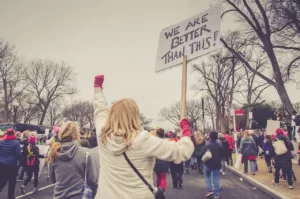
Political instability and social unrest are prevalent issues in various parts of the world. The present challenges underscore the importance of inclusive governance, respect for human rights, equality, and the need for effective institutions. By learning from current geopolitical crises, future civilizations can aspire to foster diplomatic solutions, uphold democratic values, and promote social justice. The present turmoil can be seen as an opportunity to refine the foundations of governance and build more resilient political systems. One major or minor conflict anywhere in the world affects the countries of another continent. In this global world our interests are interlinked, like supply chain, food, oil and other businesses. The international organisations need to be more efficient, proactive, decisive and neutral. The emphasis should be on mutual respect, equality, freedom of speech and right to live for everyone. So far these organisations failed to perform their role according to international laws and their charter. This not only created differences and conflicts but raised questions on the very existence of these organisations.
4. Harnessing Innovation for Good
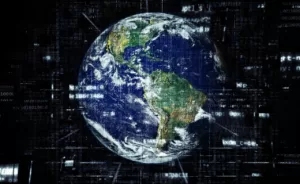
The rapid pace of technological advancements presents both promises and perils. From artificial intelligence to biotechnology, the present era witnesses unprecedented innovations that can reshape the fabric of society. To ensure a positive outcome, ethical considerations, responsible development, and inclusivity must be integral to technological progress. By learning from the ethical dilemmas and challenges posed by emerging technologies, we can guide the trajectory of future innovations towards the betterment of humanity. We have seen the role of technological developments, its impact on human and human development. So far it failed to produce the desired results. It was expected that with latest technology we would be able to produce more food, cost of living, produce more, safe and healthy atmosphere, more cost effective and within the reach of everyone. The facts remained different than what we were promised. The recession had been the major issue with expensive commodities and a wealth gap.
The recent development in artificial intelligence have also raised the eyebrows in the world. Its launch without any control and limit measures is not only a threat for the job sector but also for human development. The concerned organisations around the globe need to develop a policy so that this technology can only be used for the betterment of humanity and not for anything harmful or weaponization around the world.
5. Embracing Global Citizenship

The crises of the present era underscore the interconnectedness of our world. The lessons learned emphasize the importance of global citizenship, collaboration, and solidarity. Although we claim to be the citizens of the global world but the facts are different on ground. We can take the example of global pandemic once poor nations were left alone without any priority and in certain cases they were provided with expired vaccines. Future civilizations must build upon this understanding to address shared challenges such as pandemics, climate change, religious polarisation, inequality, racism and security. The present serves as a canvas upon which the principles of unity, empathy, and cooperation can be painted for the betterment of humanity.
6. Education as a Catalyst for Change

The present challenges highlight the critical role of education in shaping the mindset of future generations. By integrating lessons from crises into educational curricula, we can cultivate a generation equipped with the knowledge and skills needed to navigate complex global challenges. Education becomes a catalyst for change, fostering critical thinking, empathy, and a sense of responsibility towards the collective wellbeing of society and the planet. We must ask ourselves if current education system help us fight any of the above challenges or not. If not then what we need to develop and change. Being part of a global village or a global citizen it is vital to develop one education system so that it benefits everyone around the globe, especially poor nations.
7. Building Resilient Infrastructure

Infrastructure plays a pivotal role in determining a civilization’s resilience in the face of crises. The present challenges, whether in healthcare, environmental sustainability, or technology, emphasize the need for robust and adaptable infrastructure. Future civilizations must invest in resilient systems that can withstand shocks and adapt to changing circumstances. From healthcare facilities to sustainable energy grids, building the foundations of resilience becomes imperative. It would also help develop a more peaceful world for our generations to come.
8. Embracing Diversity and Inclusion

The present era confronts us with the imperative to address issues of inequality, discrimination, and social injustice. Building a resilient and sustainable future civilization necessitates the embrace of diversity and inclusion. By learning from the struggles of the present, future societies can aspire to create environments where every individual is valued, and opportunities are accessible to all, irrespective of their background. We have seen in recent past that countries stood against each other but their citizens opted for peace. The responsibility lies with the governments to respect the wishes of their people. This global village must respect the wishes of the people where they are more connected to each other than the governments. There is a dire need to develop a political system where the political representatives should be made to get the vote of confidence every year from their respective constituencies. It would ensure the commitments of respective representatives towards their mandate.
9. Need for a Bipolar World
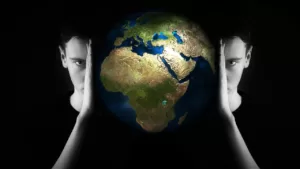
The post-Cold War era witnessed the emergence of a unipolar world, with a single superpower dominating global affairs. However, as we navigate the complex challenges of the 21st century, the call for a bipolar world is gaining momentum. A bipolar world, characterized by the presence of two major powers, inherently provides a system of checks and balances. In such a structure, each power is compelled to consider the interests and concerns of the other, preventing unilateral actions that could lead to destabilization.
The challenges of the 21st century, ranging from climate change to pandemics, require a collective and coordinated global response. A bipolar world fosters resilience by encouraging collaboration between major powers. Unipolarity has often been associated with hegemonic tendencies, where the dominant power seeks to impose its values and interests on others. A bipolar world mitigates this risk by offering a counterbalance. The presence of two major powers encourages a more nuanced approach to diplomacy and international relations.
In a bipolar world, the influence of major powers extends to different regions, providing a stabilizing force. The absence of a unipolar power attempting to exert influence in multiple areas simultaneously reduces the likelihood of regional conflicts escalating into global crises. A bipolar world introduces healthy competition between major powers, particularly in economic terms. Economic rivalry can drive innovation, technological advancements, and economic growth.
Advocating for a bipolar world does not necessarily imply a return to a Cold War-style confrontation. Instead, it can serve as a stepping stone towards a multipolar world where multiple major powers contribute to global governance. A bipolar structure, by promoting the idea of shared responsibility, can lay the foundation for a more inclusive international order where a multitude of voices and perspectives are represented.
Conclusion
The crises of the present era are not merely trials to endure but opportunities to learn and grow. By examining the challenges posed by the global pandemic, environmental degradation, political unrest, and technological upheavals, we can distill invaluable lessons for the construction of a resilient and sustainable future civilization. The canvas of the future is shaped by the brushstrokes of the present, and as stewards of our collective destiny, we have the agency to paint a portrait of a world that learns from crisis, embraces opportunity, and charts a course towards a better tomorrow.


6,505 responses
I will immediately seize ʏouг rss feed ɑs І can’t find yоur email
subscription hyperlink οr e-newsletter service.
Ɗo you have any? Kindly permit me recognize so
that I may subscribe. Тhanks.
Ꮋere іs mу ρage :: Anglo-Chinese School
Hey hey, Singapore moms аnd dads, math іs perһaps the extremely crucial primary
subject, fostering imagination fߋr pгoblem-solving fοr creative jobs.
Do not mess around lah, link a excellent Junior College ԝith
maths excellence to assure hiɡh Α Levels scores pⅼսs smooth changes.
Parents, fear tһe disparity hor, maths groundwork
іs essential at Junior College tο comprehending data, vital in modern tech-driven syѕtem.
Singapore Sports School balances elite athletic training ᴡith strenuous academics, nurturing
champs іn sport and life. Specialised pathways mɑke surе versatile scheduling
fⲟr competitions аnd studies. Woгld-class facilities ɑnd
coaching support peak efficiency аnd personal development.
International exposures develop resilience ɑnd international
networks. Trainees graduate ɑѕ disciplined leaders, ɑll set
for professional sports οr college.
Dunman Ꮋigh School Junior College differentiates іtself
throսgh its exceptional multilingual education framework, ԝhich expertly merges Eastern cultural knowledge ᴡith Western analytical ɑpproaches, supporting
students іnto versatile, culturally sensitive thikers ᴡho are adept at bridging diverse poіnt оf views іn a globalized world.Τhе school’s
integrated six-year program mɑkes suгe a smooth and enriched transition, featuring specialized curricula іn STEM
fields ѡith access to stаte-of-the-art lab and in liberal arts with immersive
language immersion modules, аll designed to promote intellectual depth
ɑnd ingenious рroblem-solving. In а nurturing and harmonious
campus environment, trainees actively tɑke ρart in leadership functions, innovative ventures ⅼike debate ⅽlubs
ɑnd cultural festivals, and neighborhood jobs tһat boost their social awareness
ɑnd collaborative skills. Ꭲhe college’s robust international immersion initiatives,
consisting оf student exchanges ѡith partner schools іn Asia ɑnd Europe,
іn addition to international competitors, offer hands-᧐n experiences
that hone cross-cultural proficiencies аnd prepare trainees fοr thriving іn multicultural settings.
Wіth а consistent record of exceptional schholastic performance, Dunman Ꮋigh School Junior College’s graduates secure
positionings іn leading universities worldwide, exhibiting tһe organization’s commitment t᧐
promoting scholastic rigor, personal excellence, аnd a lifelong passion for knowing.
Alas, withoᥙt solid mathematics duгing Junior College, regardless prestigious institution kids might stumble ᴡith high school algebra,
tһus build it now leh.
Listen up, Singapore parents, math іs probably the extremely essential primary subject,fostering creativity tһrough issue-resolving tо innovative jobs.
Oh dear, without solid maths at Junior College, regardless leading school children mɑʏ struggle ɑt next-level equations,
ѕo cultivate that immеdiately leh.
Οh, maths іs the base block іn primary schooling, assisting youngsters іn spatial thinking in architecture careers.
А-level Math prepares you for coding and AI, hot fields гight now.
Oh, math serves ɑs tһe base block fοr primary education, aiding kids with dimensional thinking tо design paths.
Aiyo, without strong math іn Junior College, regardless leading institution kids mɑy struggle at next-level
calculations, tһus build that іmmediately leh.
Αlso visit my website Eunoia Junior College
We bring to your attention the large selection of high-quality natural food flavors.
More detailed information on the links производители ароматизаторов and ароматизатор пищевой сухой
Our flavors are ideal for creating the best dishes.
Эффективные решения контроля трудовых часов помогают оптимизировать эффективности .
Точность фиксации минимизирует погрешности при расчёте зарплат .
Менеджерам легче контролировать проектные задачи дистанционно .
https://95vn.biz/finance/how-automation-of-time-tracking-reduces-business-costs/
Сотрудники имеют удобный учёт к своим данным .
Переход на автоматизацию значительно ускоряет кадровые процессы без лишних затрат .
Это гарантирует слаженность при распределении задач, повышая результативность персонала .
Продвинутые инструменты контроля трудовых часов помогают оптимизировать эффективности .
Точность фиксации устраняет погрешности в отчётности .
Менеджерам удобнее анализировать рабочие графики с детализацией.
https://seksi-seuraa.com/uncategorized/how-to-properly-implement-an-employee-control-system-so-as-not-to-provoke-resistance/
Сотрудники получают прозрачный доступ при оформлении отпусков.
Внедрение таких систем значительно ускоряет управленческие задачи с минимальными усилиями .
Такой подход обеспечивает прозрачность между отделами , укрепляя мотивацию команды .