


Introduction
In the tapestry of human history, crises have often been the crucibles in which the resilience and adaptability of civilizations are tested and refined. The present epoch is no exception. As we navigate through the challenges of the 21st century, the confluence of global pandemics, environmental degradation, political unrest, and technological upheavals presents both crises and opportunities that demand our attention. This blog aims to explore the multifaceted nature of the present challenges and discern the invaluable lessons they offer for the shaping of a more resilient and sustainable future civilization.
1. Catalyst for Change

The COVID-19 pandemic, an unprecedented global health crisis, has not only exposed the vulnerabilities of our interconnected world but has also unveiled opportunities for transformative change. Nations that embraced science, technology, and international collaboration have demonstrated resilience in the face of adversity. The pandemic has highlighted the importance of investing in healthcare infrastructure, global cooperation in crisis response, and the need for equitable distribution of medical resources. It revealed the vulnerability of developing and impoverished nations to manage the pandemic, as wealthier countries prioritised their own citizens first. Whereas the situation should have been much more different than what we saw and people went through by struggling for vaccines.
2. Environmental Degradation

The alarming rate of environmental degradation poses an existential threat to our planet. From deforestation to climate change, the challenges are daunting. However, these crises can serve as a wake-up call for humanity to adopt sustainable practices. The imperative to transition towards renewable energy, conservation of biodiversity, and responsible consumption practices becomes ever more urgent. The lessons learned from the present can guide us towards building a harmonious relationship with the environment for the benefit of current and future generations. We also need to realise that so far in most of the cases we failed even with all that technology. The nature seems to beat us, therefore a consolidated and global effort is required to fight against this threat. We have to take each other on board and support. We being the part of a global village, everything affects each other no matter where we are and live in this world. Our interests, goals and motives are common and linked.
3. Political Unrest
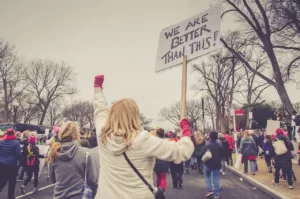
Political instability and social unrest are prevalent issues in various parts of the world. The present challenges underscore the importance of inclusive governance, respect for human rights, equality, and the need for effective institutions. By learning from current geopolitical crises, future civilizations can aspire to foster diplomatic solutions, uphold democratic values, and promote social justice. The present turmoil can be seen as an opportunity to refine the foundations of governance and build more resilient political systems. One major or minor conflict anywhere in the world affects the countries of another continent. In this global world our interests are interlinked, like supply chain, food, oil and other businesses. The international organisations need to be more efficient, proactive, decisive and neutral. The emphasis should be on mutual respect, equality, freedom of speech and right to live for everyone. So far these organisations failed to perform their role according to international laws and their charter. This not only created differences and conflicts but raised questions on the very existence of these organisations.
4. Harnessing Innovation for Good
The rapid pace of technological advancements presents both promises and perils. From artificial intelligence to biotechnology, the present era witnesses unprecedented innovations that can reshape the fabric of society. To ensure a positive outcome, ethical considerations, responsible development, and inclusivity must be integral to technological progress. By learning from the ethical dilemmas and challenges posed by emerging technologies, we can guide the trajectory of future innovations towards the betterment of humanity. We have seen the role of technological developments, its impact on human and human development. So far it failed to produce the desired results. It was expected that with latest technology we would be able to produce more food, cost of living, produce more, safe and healthy atmosphere, more cost effective and within the reach of everyone. The facts remained different than what we were promised. The recession had been the major issue with expensive commodities and a wealth gap.
The recent development in artificial intelligence have also raised the eyebrows in the world. Its launch without any control and limit measures is not only a threat for the job sector but also for human development. The concerned organisations around the globe need to develop a policy so that this technology can only be used for the betterment of humanity and not for anything harmful or weaponization around the world.
5. Embracing Global Citizenship

The crises of the present era underscore the interconnectedness of our world. The lessons learned emphasize the importance of global citizenship, collaboration, and solidarity. Although we claim to be the citizens of the global world but the facts are different on ground. We can take the example of global pandemic once poor nations were left alone without any priority and in certain cases they were provided with expired vaccines. Future civilizations must build upon this understanding to address shared challenges such as pandemics, climate change, religious polarisation, inequality, racism and security. The present serves as a canvas upon which the principles of unity, empathy, and cooperation can be painted for the betterment of humanity.
6. Education as a Catalyst for Change

The present challenges highlight the critical role of education in shaping the mindset of future generations. By integrating lessons from crises into educational curricula, we can cultivate a generation equipped with the knowledge and skills needed to navigate complex global challenges. Education becomes a catalyst for change, fostering critical thinking, empathy, and a sense of responsibility towards the collective wellbeing of society and the planet. We must ask ourselves if current education system help us fight any of the above challenges or not. If not then what we need to develop and change. Being part of a global village or a global citizen it is vital to develop one education system so that it benefits everyone around the globe, especially poor nations.
7. Building Resilient Infrastructure

Infrastructure plays a pivotal role in determining a civilization’s resilience in the face of crises. The present challenges, whether in healthcare, environmental sustainability, or technology, emphasize the need for robust and adaptable infrastructure. Future civilizations must invest in resilient systems that can withstand shocks and adapt to changing circumstances. From healthcare facilities to sustainable energy grids, building the foundations of resilience becomes imperative. It would also help develop a more peaceful world for our generations to come.
8. Embracing Diversity and Inclusion

The present era confronts us with the imperative to address issues of inequality, discrimination, and social injustice. Building a resilient and sustainable future civilization necessitates the embrace of diversity and inclusion. By learning from the struggles of the present, future societies can aspire to create environments where every individual is valued, and opportunities are accessible to all, irrespective of their background. We have seen in recent past that countries stood against each other but their citizens opted for peace. The responsibility lies with the governments to respect the wishes of their people. This global village must respect the wishes of the people where they are more connected to each other than the governments. There is a dire need to develop a political system where the political representatives should be made to get the vote of confidence every year from their respective constituencies. It would ensure the commitments of respective representatives towards their mandate.
9. Need for a Bipolar World
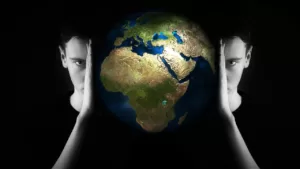
The post-Cold War era witnessed the emergence of a unipolar world, with a single superpower dominating global affairs. However, as we navigate the complex challenges of the 21st century, the call for a bipolar world is gaining momentum. A bipolar world, characterized by the presence of two major powers, inherently provides a system of checks and balances. In such a structure, each power is compelled to consider the interests and concerns of the other, preventing unilateral actions that could lead to destabilization.
The challenges of the 21st century, ranging from climate change to pandemics, require a collective and coordinated global response. A bipolar world fosters resilience by encouraging collaboration between major powers. Unipolarity has often been associated with hegemonic tendencies, where the dominant power seeks to impose its values and interests on others. A bipolar world mitigates this risk by offering a counterbalance. The presence of two major powers encourages a more nuanced approach to diplomacy and international relations.
In a bipolar world, the influence of major powers extends to different regions, providing a stabilizing force. The absence of a unipolar power attempting to exert influence in multiple areas simultaneously reduces the likelihood of regional conflicts escalating into global crises. A bipolar world introduces healthy competition between major powers, particularly in economic terms. Economic rivalry can drive innovation, technological advancements, and economic growth.
Advocating for a bipolar world does not necessarily imply a return to a Cold War-style confrontation. Instead, it can serve as a stepping stone towards a multipolar world where multiple major powers contribute to global governance. A bipolar structure, by promoting the idea of shared responsibility, can lay the foundation for a more inclusive international order where a multitude of voices and perspectives are represented.
Conclusion
The crises of the present era are not merely trials to endure but opportunities to learn and grow. By examining the challenges posed by the global pandemic, environmental degradation, political unrest, and technological upheavals, we can distill invaluable lessons for the construction of a resilient and sustainable future civilization. The canvas of the future is shaped by the brushstrokes of the present, and as stewards of our collective destiny, we have the agency to paint a portrait of a world that learns from crisis, embraces opportunity, and charts a course towards a better tomorrow.



6,505 responses
Если вы хотите обеспечить безопасность своего автомобиля в холодное время года, то необходимо купить недорогие зимние шины в проверенном магазине.
при ежедневных поездках в условиях гололедной дороги. Они обеспечивают большую безопасность и контроль на зимней дороге . Кроме того, зимние шины помогут сохранить жизнь в условиях внезапного торможения.
Зимние шины также различаются по типу протектора, который подходит для разных типов автомобилей . Это означает, что при выборе шин необходимо учитывать многие факторы, такие как климат, тип автомобиля и личные предпочтения . Некоторые производители также предлагают шины, изготовленные из экологически чистых материалов .
При выборе зимних шин необходимо учитывать климат и условия, в которых будет эксплуатироваться автомобиль . Это позволит определить необходимые характеристики шин, такие как размер и тип протектора . Кроме того, необходимо проконсультироваться с экспертами или продавцами шин.
Некоторые водители также предпочитают покупать шины у официальных дилеров, чтобы получить гарантию. Это может быть обосновано желанием получить высокое качество и надежность . В любом случае, стоит потратить время и усилия, чтобы найти идеальные шины.
После покупки зимних шин необходимо проверить давление в шинах и исправить его при необходимости. Это позволит обеспечить максимальную эффективность и безопасность шин . Кроме того, необходимо регулярно проверять состояние шин и менять их при необходимости .
Некоторые водители также предпочитают самостоятельно обслуживать и ремонтировать шины, чтобы сэкономить деньги . Это может быть обусловлено желанием иметь полный контроль над автомобилем и его техническим состоянием. В любом случае, стоит потратить время и усилия, чтобы обеспечить правильную установку и обслуживание шин.
В заключении, зимние шины являются важным элементом безопасности и комфорта на дороге . Они предлагают возможность двигаться с высокой скоростью без опасения за свою жизнь . При выборе зимних шин необходимо обратить внимание на репутацию производителя и отзывы других клиентов .
Некоторые производители также предлагают шины с новыми технологиями, которые улучшают сцепку и торможение . Это означает, что необходимо обратить внимание на репутацию производителя и отзывы других клиентов . В любом случае, необходимо подходить к этому вопросу ответственно и обдуманно .
Если вы ищете качественные шипованная резина новая купить, то наш магазин предлагает широкий ассортимент зимних шин по доступным ценам.
разработанную для безопасной езды на заснеженных и обледенелых дорогах . Эта конструкция оснащена шипами, позволяющие улучшить тормозной путь и снизить риск заноса . Использование зимних шин шипованных становится особенно актуальным в регионах с холодным климатом, где необходимы шины, способные обеспечить стабильное и безопасное движение в условиях низких температур .
Зимние шины шипованные являются обязательным атрибутом для многих автолюбителей, предпочитающих безопасность и стабильность на дороге в период низких температур . Они обеспечивают повышенную трение и снижение риска заноса . Кроме того, зимние шины шипованные созданы для использования в экстремальных условиях .
Использование зимних шин шипованных имеет множество преимуществ, повышающих общую безопасность и снижающих риск аварий на дороге . Зимние шины шипованные обеспечивают лучшее торможение и ускорение на снегу и льду . Кроме того, зимние шины шипованные снижают риск аварий и травм .
Зимние шины шипованные также подходят для использования в различных условиях, включая дождь, снег и мороз . Они обеспечивают отличную производительность и долговечность . Использование зимних шин шипованных повышает общую безопасность и снижает риск аварий на дороге .
Существует несколько типов зимних шин шипованных, имеющих различные размеры и конфигурации . Зимние шины шипованные могут быть различаться по материалу, используемому в их производстве . Кроме того, зимние шины шипованные иметь специальные properties, такие как повышенная прочность или долговечность .
Зимние шины шипованные также быть разработаны для совместимости с различными типами автомобильных колес . Использование зимних шин шипованных повышает общую безопасность и снижает риск аварий на дороге . Зимние шины шипованные являются обязательным атрибутом для многих автолюбителей .
Использование зимних шин шипованных является важным элементом безопасности на дороге, позволяя водителям чувствовать себя более уверенно и безопасно на дороге . Зимние шины шипованные разработаны для того, чтобы сохранять свои properties даже при очень низких температурах . Кроме того, зимние шины шипованные повышают безопасность и снижают риск смертельных исходов .
Зимние шины шипованные являются важным элементом безопасности на дороге . Использование зимних шин шипованных повышает общую безопасность и снижает риск аварий на дороге . В заключении, зимние шины шипованные обеспечивают повышенную трение и снижение риска заноса .
Gewoon op je telefoon, tablet of laptop. In de hele EU https://www.mapleprimes.com/users/AmaliaAvila4
Хочешь сдать металл? вывоз металла наша компания специализируется на профессиональном приёме металлолома уже на протяжении многих лет. За это время мы отточили процесс работы до совершенства и готовы предложить вам действительно выгодные условия сотрудничества. Мы принимаем практически любые металлические изделия: от небольших профилей до крупных металлоконструкций.
Есть металлолом? вывоз металла мы предлагаем полный цикл услуг по приему металлолома в Санкт-Петербурге, включая оперативную транспортировку материалов непосредственно на перерабатывающий завод. Особое внимание мы уделяем удобству наших клиентов. Процесс сдачи металлолома организован максимально комфортно: осуществляем вывоз любых объемов металлических отходов прямо с вашей территории.