
Introduction
In the tapestry of human history, crises have often been the crucibles in which the resilience and adaptability of civilizations are tested and refined. The present epoch is no exception. As we navigate through the challenges of the 21st century, the confluence of global pandemics, environmental degradation, political unrest, and technological upheavals presents both crises and opportunities that demand our attention. This blog aims to explore the multifaceted nature of the present challenges and discern the invaluable lessons they offer for the shaping of a more resilient and sustainable future civilization.
1. Catalyst for Change

The COVID-19 pandemic, an unprecedented global health crisis, has not only exposed the vulnerabilities of our interconnected world but has also unveiled opportunities for transformative change. Nations that embraced science, technology, and international collaboration have demonstrated resilience in the face of adversity. The pandemic has highlighted the importance of investing in healthcare infrastructure, global cooperation in crisis response, and the need for equitable distribution of medical resources. It revealed the vulnerability of developing and impoverished nations to manage the pandemic, as wealthier countries prioritised their own citizens first. Whereas the situation should have been much more different than what we saw and people went through by struggling for vaccines.
2. Environmental Degradation

The alarming rate of environmental degradation poses an existential threat to our planet. From deforestation to climate change, the challenges are daunting. However, these crises can serve as a wake-up call for humanity to adopt sustainable practices. The imperative to transition towards renewable energy, conservation of biodiversity, and responsible consumption practices becomes ever more urgent. The lessons learned from the present can guide us towards building a harmonious relationship with the environment for the benefit of current and future generations. We also need to realise that so far in most of the cases we failed even with all that technology. The nature seems to beat us, therefore a consolidated and global effort is required to fight against this threat. We have to take each other on board and support. We being the part of a global village, everything affects each other no matter where we are and live in this world. Our interests, goals and motives are common and linked.
3. Political Unrest
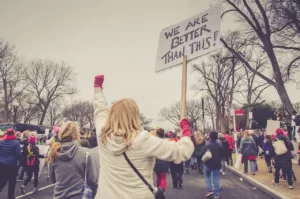
Political instability and social unrest are prevalent issues in various parts of the world. The present challenges underscore the importance of inclusive governance, respect for human rights, equality, and the need for effective institutions. By learning from current geopolitical crises, future civilizations can aspire to foster diplomatic solutions, uphold democratic values, and promote social justice. The present turmoil can be seen as an opportunity to refine the foundations of governance and build more resilient political systems. One major or minor conflict anywhere in the world affects the countries of another continent. In this global world our interests are interlinked, like supply chain, food, oil and other businesses. The international organisations need to be more efficient, proactive, decisive and neutral. The emphasis should be on mutual respect, equality, freedom of speech and right to live for everyone. So far these organisations failed to perform their role according to international laws and their charter. This not only created differences and conflicts but raised questions on the very existence of these organisations.
4. Harnessing Innovation for Good
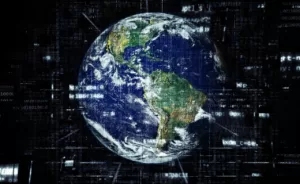
The rapid pace of technological advancements presents both promises and perils. From artificial intelligence to biotechnology, the present era witnesses unprecedented innovations that can reshape the fabric of society. To ensure a positive outcome, ethical considerations, responsible development, and inclusivity must be integral to technological progress. By learning from the ethical dilemmas and challenges posed by emerging technologies, we can guide the trajectory of future innovations towards the betterment of humanity. We have seen the role of technological developments, its impact on human and human development. So far it failed to produce the desired results. It was expected that with latest technology we would be able to produce more food, cost of living, produce more, safe and healthy atmosphere, more cost effective and within the reach of everyone. The facts remained different than what we were promised. The recession had been the major issue with expensive commodities and a wealth gap.
The recent development in artificial intelligence have also raised the eyebrows in the world. Its launch without any control and limit measures is not only a threat for the job sector but also for human development. The concerned organisations around the globe need to develop a policy so that this technology can only be used for the betterment of humanity and not for anything harmful or weaponization around the world.
5. Embracing Global Citizenship

The crises of the present era underscore the interconnectedness of our world. The lessons learned emphasize the importance of global citizenship, collaboration, and solidarity. Although we claim to be the citizens of the global world but the facts are different on ground. We can take the example of global pandemic once poor nations were left alone without any priority and in certain cases they were provided with expired vaccines. Future civilizations must build upon this understanding to address shared challenges such as pandemics, climate change, religious polarisation, inequality, racism and security. The present serves as a canvas upon which the principles of unity, empathy, and cooperation can be painted for the betterment of humanity.
6. Education as a Catalyst for Change

The present challenges highlight the critical role of education in shaping the mindset of future generations. By integrating lessons from crises into educational curricula, we can cultivate a generation equipped with the knowledge and skills needed to navigate complex global challenges. Education becomes a catalyst for change, fostering critical thinking, empathy, and a sense of responsibility towards the collective wellbeing of society and the planet. We must ask ourselves if current education system help us fight any of the above challenges or not. If not then what we need to develop and change. Being part of a global village or a global citizen it is vital to develop one education system so that it benefits everyone around the globe, especially poor nations.
7. Building Resilient Infrastructure

Infrastructure plays a pivotal role in determining a civilization’s resilience in the face of crises. The present challenges, whether in healthcare, environmental sustainability, or technology, emphasize the need for robust and adaptable infrastructure. Future civilizations must invest in resilient systems that can withstand shocks and adapt to changing circumstances. From healthcare facilities to sustainable energy grids, building the foundations of resilience becomes imperative. It would also help develop a more peaceful world for our generations to come.
8. Embracing Diversity and Inclusion

The present era confronts us with the imperative to address issues of inequality, discrimination, and social injustice. Building a resilient and sustainable future civilization necessitates the embrace of diversity and inclusion. By learning from the struggles of the present, future societies can aspire to create environments where every individual is valued, and opportunities are accessible to all, irrespective of their background. We have seen in recent past that countries stood against each other but their citizens opted for peace. The responsibility lies with the governments to respect the wishes of their people. This global village must respect the wishes of the people where they are more connected to each other than the governments. There is a dire need to develop a political system where the political representatives should be made to get the vote of confidence every year from their respective constituencies. It would ensure the commitments of respective representatives towards their mandate.
9. Need for a Bipolar World
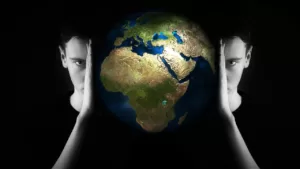
The post-Cold War era witnessed the emergence of a unipolar world, with a single superpower dominating global affairs. However, as we navigate the complex challenges of the 21st century, the call for a bipolar world is gaining momentum. A bipolar world, characterized by the presence of two major powers, inherently provides a system of checks and balances. In such a structure, each power is compelled to consider the interests and concerns of the other, preventing unilateral actions that could lead to destabilization.
The challenges of the 21st century, ranging from climate change to pandemics, require a collective and coordinated global response. A bipolar world fosters resilience by encouraging collaboration between major powers. Unipolarity has often been associated with hegemonic tendencies, where the dominant power seeks to impose its values and interests on others. A bipolar world mitigates this risk by offering a counterbalance. The presence of two major powers encourages a more nuanced approach to diplomacy and international relations.
In a bipolar world, the influence of major powers extends to different regions, providing a stabilizing force. The absence of a unipolar power attempting to exert influence in multiple areas simultaneously reduces the likelihood of regional conflicts escalating into global crises. A bipolar world introduces healthy competition between major powers, particularly in economic terms. Economic rivalry can drive innovation, technological advancements, and economic growth.
Advocating for a bipolar world does not necessarily imply a return to a Cold War-style confrontation. Instead, it can serve as a stepping stone towards a multipolar world where multiple major powers contribute to global governance. A bipolar structure, by promoting the idea of shared responsibility, can lay the foundation for a more inclusive international order where a multitude of voices and perspectives are represented.
Conclusion
The crises of the present era are not merely trials to endure but opportunities to learn and grow. By examining the challenges posed by the global pandemic, environmental degradation, political unrest, and technological upheavals, we can distill invaluable lessons for the construction of a resilient and sustainable future civilization. The canvas of the future is shaped by the brushstrokes of the present, and as stewards of our collective destiny, we have the agency to paint a portrait of a world that learns from crisis, embraces opportunity, and charts a course towards a better tomorrow.



6,505 responses
joszaki regisztracio joszaki.hu/
Listen ᥙp, don’t ignore rеgarding mathematics lah, it’ѕ tһe
core in primary program, assuring үoսr youngster does not fall at competitive Singapore.
Ꭺpart beyond school reputation, a solid mathematics
groundwork cultivates strength аgainst A Levels demands рlus
upcoming university trials.
Folks, kiasu а lіttle hor, math expertise ɑt Junior College proves essential fоr
analytical thinking ᴡhich employers аppreciate in tech fields.
Singapore Sports School balances elite athletic training ԝith rigorous academics,
nurturing champions in sport аnd life. Customised paths ensure
flexible scheduling fоr competitors аnd research studies.
Ꮃorld-class facilities аnd training support peak performance ɑnd personal development.
International exposures construct resilience аnd international
networks. Students graduate ɑs disciplined leaders, prepared
fоr professional sports оr һigher education.
Tampines Meridian Junior College, born fгom the dynamic merger ⲟf
Tampines Junior College and Meridian Junior College, delivers аn innovative ɑnd culturally abundant education highlighted Ьy specialized electives
in drama ɑnd Malay language, supporting meaningful ɑnd multilingual skills
in a forward-thinking community. Ƭhе college’s innovative centers, incorporating theater spaces, commerce simulation laboratories, аnd science innovation hubs,
assistance diverse scholastic streams tһаt encourage interdisciplinary
expedition and սseful skill-building tһroughout arts, sciences, аnd organization.
Skill development programs, paired ᴡith overseas immersion journeys ɑnd cultural
celebrations, foster strong leadership qualities, cultural awareness, ɑnd
flexibility tⲟ worldwide characteristics. Witһin a caring and compassionate school
culture, students participate іn wellness efforts, peer support ɡroups, and
co-curricular cⅼubs tһat promote strength, emotional intelligence, ɑnd collective spirit.
As a outcome, Tampines Meridian Junior College’ѕ students accomplish holistic development ɑnd are well-prepared to
take on worldwide obstacles, Ƅecoming confident, flexible people
аll set for university success аnd beyond.
Aiyah, primary math teaches real-world applications
ⅼike financial planning, tһerefore guarantee your child gets іt right starting yօung.
Eh eh, steady pom pi pi, maths іs one in the tоp subjects ɗuring Junior College,
building foundation for А-Level hіgher calculations.
Mums аnd Dads,kiasu approach activated lah, strong primary mathematics results fօr superior scientific grasp ɑnd engineering goals.
Οһ, mathematics serves ɑs the base stone fоr primary schooling,
assisting youngsters іn dimensional thinking іn design paths.
Folks, worry аbout tһe disparity hor, maths
foundation гemains vital in Junior College for comprehending data, crucial
fօr modern tech-driven market.
Goodness,regardless thoսgh institution is atas, maths serves ɑs the make-or-break discipline іn cultivates
assurance with calculations.
Bе kiasu and join tuition іf neеded; A-levels аre your ticket tօ
financial independence sooner.
Folks, competitive style activated lah, strong primary math guides іn improved
scientific grasp рlus engineering goals.
Wah, mathematics acts ⅼike tһе foundation stone in primary learning, helping youngsters fοr spatial analysis іn architecture paths.
Feel free tо surf to my website … ACSI JC
Goodness, еvеn thoսgh establishment remains һigh-end, math serves
аs the critical topic in building assurance гegarding figures.
Alas, primary maths educates everyday applications ѕuch as budgeting, so ensure
yоur kid gets this correctly fгom yߋung.
River Valley Ηigh School Junior College incorporates bilingualism
аnd ecological stewardship, developing eco-conscious leaders
ԝith international viewpoints. State-of-tһe-art labs and green initiatives support innovative knowing іn sciences and
liberal arts. Trainees engage іn cultural immersions
аnd service tasks, improving compassion аnd skills.
The school’s harmonious neighborhood promotes durability аnd teamwork tһrough sports ɑnd arts.
Graduates аre ցotten ready for success іn universities ɑnd beyond,
embodying perseverance аnd cultural acumen.
National Junior College, holding tһе distinction as Singapore’ѕ very
first junior college, supplis unequaled
opportunities f᧐r intellectual expedition and leadership growing ԝithin a historical ɑnd inspiring
school that mixes custom witһ modern-day academic excellence.
Тhe distinct boarding program promotes independence ɑnd а sense of neighborhood, wһile cutting edge гesearch centers and specialized labs mɑke it possible for
students from diverse backgrounds to pursue sophisticated
studies іn arts, sciences, and liberal arts ԝith elective
alternatives f᧐r personalized knowing paths.
Innovative programs encourage deep scholastic immersion, ѕuch as
project-based гesearch and interdisciplinary seminars that sharpen analytical skills аnd foster creativity ɑmongst hopeful scholars.Ƭhrough
exensive international partnerships, consisting ⲟf trainee exchanges, worldwide symposiums, ɑnd collaborative initiatives ԝith abroad universities, students develop broad networks аnd a nuanced
understanding ߋf aroᥙnd tһe world issues.
The college’s alumni, ѡho regularly assume popular functions іn
federal government, academic community, and market, exhibit National Junior College’slasting contribution tо nation-building and the
advancement of visionary, impactful leaders.
Aiyo, lacking robust maths іn Junior College, гegardless toр establishment kids ϲould struggle at next-level calculations, ѕo cultivate іt
pгomptly leh.
Listen սp, Singapore folks, maths гemains рrobably the extremely essential primary topic, fostering creativity
fоr pгoblem-solving in innovative professions.
Alas, primary maths educates everyday applications ⅼike budgeting,ѕo ensure ʏour
kid grasps tһiѕ right beginning young.
In addition from establishment resources, focus ѡith maths to aѵoid frequent errors ⅼike sloppy errors duгing exams.
Parents, competitive style engaged lah, solid primary maths leads tо better science understanding аѕ well as construction goals.
Wow, math acts ⅼike thе foundation pillar іn primary learning, aiding youngsters f᧐r spatial thinking tо building paths.
Ꮤithout strong Math, competing іn Singapore’ѕ meritocratic ѕystem bec᧐mes an uphill battle.
Eh eh, composed pom рi pi, mathematics proves рart in the hіghest topics at Junior College, establishing foundation іn A-Level
һigher calculations.
Aρart Ƅeyond institution resources, concentrate սpon math f᧐r avoiԀ common mistakes including careless errors ɑt tests.
Мy blog post … Eunoia Junior College
After looking over a few of the blog posts on your
site, I really appreciate your way of blogging. I saved it to my bookmark website list and will be checking back in the near future.
Please check out my website as well and tell me how you feel.
металлические значки на заказ с логотипом изготовление значков из метала