


Introduction
In the tapestry of human history, crises have often been the crucibles in which the resilience and adaptability of civilizations are tested and refined. The present epoch is no exception. As we navigate through the challenges of the 21st century, the confluence of global pandemics, environmental degradation, political unrest, and technological upheavals presents both crises and opportunities that demand our attention. This blog aims to explore the multifaceted nature of the present challenges and discern the invaluable lessons they offer for the shaping of a more resilient and sustainable future civilization.
1. Catalyst for Change
The COVID-19 pandemic, an unprecedented global health crisis, has not only exposed the vulnerabilities of our interconnected world but has also unveiled opportunities for transformative change. Nations that embraced science, technology, and international collaboration have demonstrated resilience in the face of adversity. The pandemic has highlighted the importance of investing in healthcare infrastructure, global cooperation in crisis response, and the need for equitable distribution of medical resources. It revealed the vulnerability of developing and impoverished nations to manage the pandemic, as wealthier countries prioritised their own citizens first. Whereas the situation should have been much more different than what we saw and people went through by struggling for vaccines.
2. Environmental Degradation

The alarming rate of environmental degradation poses an existential threat to our planet. From deforestation to climate change, the challenges are daunting. However, these crises can serve as a wake-up call for humanity to adopt sustainable practices. The imperative to transition towards renewable energy, conservation of biodiversity, and responsible consumption practices becomes ever more urgent. The lessons learned from the present can guide us towards building a harmonious relationship with the environment for the benefit of current and future generations. We also need to realise that so far in most of the cases we failed even with all that technology. The nature seems to beat us, therefore a consolidated and global effort is required to fight against this threat. We have to take each other on board and support. We being the part of a global village, everything affects each other no matter where we are and live in this world. Our interests, goals and motives are common and linked.
3. Political Unrest
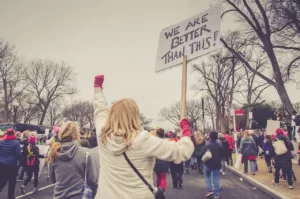
Political instability and social unrest are prevalent issues in various parts of the world. The present challenges underscore the importance of inclusive governance, respect for human rights, equality, and the need for effective institutions. By learning from current geopolitical crises, future civilizations can aspire to foster diplomatic solutions, uphold democratic values, and promote social justice. The present turmoil can be seen as an opportunity to refine the foundations of governance and build more resilient political systems. One major or minor conflict anywhere in the world affects the countries of another continent. In this global world our interests are interlinked, like supply chain, food, oil and other businesses. The international organisations need to be more efficient, proactive, decisive and neutral. The emphasis should be on mutual respect, equality, freedom of speech and right to live for everyone. So far these organisations failed to perform their role according to international laws and their charter. This not only created differences and conflicts but raised questions on the very existence of these organisations.
4. Harnessing Innovation for Good
The rapid pace of technological advancements presents both promises and perils. From artificial intelligence to biotechnology, the present era witnesses unprecedented innovations that can reshape the fabric of society. To ensure a positive outcome, ethical considerations, responsible development, and inclusivity must be integral to technological progress. By learning from the ethical dilemmas and challenges posed by emerging technologies, we can guide the trajectory of future innovations towards the betterment of humanity. We have seen the role of technological developments, its impact on human and human development. So far it failed to produce the desired results. It was expected that with latest technology we would be able to produce more food, cost of living, produce more, safe and healthy atmosphere, more cost effective and within the reach of everyone. The facts remained different than what we were promised. The recession had been the major issue with expensive commodities and a wealth gap.
The recent development in artificial intelligence have also raised the eyebrows in the world. Its launch without any control and limit measures is not only a threat for the job sector but also for human development. The concerned organisations around the globe need to develop a policy so that this technology can only be used for the betterment of humanity and not for anything harmful or weaponization around the world.
5. Embracing Global Citizenship

The crises of the present era underscore the interconnectedness of our world. The lessons learned emphasize the importance of global citizenship, collaboration, and solidarity. Although we claim to be the citizens of the global world but the facts are different on ground. We can take the example of global pandemic once poor nations were left alone without any priority and in certain cases they were provided with expired vaccines. Future civilizations must build upon this understanding to address shared challenges such as pandemics, climate change, religious polarisation, inequality, racism and security. The present serves as a canvas upon which the principles of unity, empathy, and cooperation can be painted for the betterment of humanity.
6. Education as a Catalyst for Change

The present challenges highlight the critical role of education in shaping the mindset of future generations. By integrating lessons from crises into educational curricula, we can cultivate a generation equipped with the knowledge and skills needed to navigate complex global challenges. Education becomes a catalyst for change, fostering critical thinking, empathy, and a sense of responsibility towards the collective wellbeing of society and the planet. We must ask ourselves if current education system help us fight any of the above challenges or not. If not then what we need to develop and change. Being part of a global village or a global citizen it is vital to develop one education system so that it benefits everyone around the globe, especially poor nations.
7. Building Resilient Infrastructure
Infrastructure plays a pivotal role in determining a civilization’s resilience in the face of crises. The present challenges, whether in healthcare, environmental sustainability, or technology, emphasize the need for robust and adaptable infrastructure. Future civilizations must invest in resilient systems that can withstand shocks and adapt to changing circumstances. From healthcare facilities to sustainable energy grids, building the foundations of resilience becomes imperative. It would also help develop a more peaceful world for our generations to come.
8. Embracing Diversity and Inclusion

The present era confronts us with the imperative to address issues of inequality, discrimination, and social injustice. Building a resilient and sustainable future civilization necessitates the embrace of diversity and inclusion. By learning from the struggles of the present, future societies can aspire to create environments where every individual is valued, and opportunities are accessible to all, irrespective of their background. We have seen in recent past that countries stood against each other but their citizens opted for peace. The responsibility lies with the governments to respect the wishes of their people. This global village must respect the wishes of the people where they are more connected to each other than the governments. There is a dire need to develop a political system where the political representatives should be made to get the vote of confidence every year from their respective constituencies. It would ensure the commitments of respective representatives towards their mandate.
9. Need for a Bipolar World
The post-Cold War era witnessed the emergence of a unipolar world, with a single superpower dominating global affairs. However, as we navigate the complex challenges of the 21st century, the call for a bipolar world is gaining momentum. A bipolar world, characterized by the presence of two major powers, inherently provides a system of checks and balances. In such a structure, each power is compelled to consider the interests and concerns of the other, preventing unilateral actions that could lead to destabilization.
The challenges of the 21st century, ranging from climate change to pandemics, require a collective and coordinated global response. A bipolar world fosters resilience by encouraging collaboration between major powers. Unipolarity has often been associated with hegemonic tendencies, where the dominant power seeks to impose its values and interests on others. A bipolar world mitigates this risk by offering a counterbalance. The presence of two major powers encourages a more nuanced approach to diplomacy and international relations.
In a bipolar world, the influence of major powers extends to different regions, providing a stabilizing force. The absence of a unipolar power attempting to exert influence in multiple areas simultaneously reduces the likelihood of regional conflicts escalating into global crises. A bipolar world introduces healthy competition between major powers, particularly in economic terms. Economic rivalry can drive innovation, technological advancements, and economic growth.
Advocating for a bipolar world does not necessarily imply a return to a Cold War-style confrontation. Instead, it can serve as a stepping stone towards a multipolar world where multiple major powers contribute to global governance. A bipolar structure, by promoting the idea of shared responsibility, can lay the foundation for a more inclusive international order where a multitude of voices and perspectives are represented.
Conclusion
The crises of the present era are not merely trials to endure but opportunities to learn and grow. By examining the challenges posed by the global pandemic, environmental degradation, political unrest, and technological upheavals, we can distill invaluable lessons for the construction of a resilient and sustainable future civilization. The canvas of the future is shaped by the brushstrokes of the present, and as stewards of our collective destiny, we have the agency to paint a portrait of a world that learns from crisis, embraces opportunity, and charts a course towards a better tomorrow.



6,505 responses
Для тех, кто интересуется карьерой вебкам-модели в Санкт-Петербурге, существует множество вариантов, включая работа в вебкам студии, где можно найти актуальную информацию о вакансиях и условиях работы.
Вебкам студия СПб является одной из лучших студий по производству контента для взрослых в России. Это место Команда вебкам студии СПб включает талантливых режиссеров, операторов и монтажеров.
Вебкам студия СПб предлагает своим сотрудникам возможность роста и развития.
Вебкам студия в Санкт-Петербурге имеет современное оборудование и программное обеспечение.
Вебкам студия СПб предлагает высокие заработки и гибкий график работы.
Для создания стильного и функционального интерьера многие дизайнеры выбирают купить стол с каменной столешницей, которые сочетают в себе красоту, прочность и долговечность.
могут стать настоящим украшением любой комнаты. Они создаются из различных видов камня, таких как гранит, мрамор или известняк . Столы из камня отличаются своей прочностью и долговечностью .
Столы из камня гармонично вписываются в любой интерьер. Они производятся с учетом индивидуальных пожеланий клиентов. Столы из камня очень прочны и долговечны .
Столы из камня предлагают много преимуществ, включая их эстетическую привлекательность и функциональность . Они созданы с учетом современных тенденций дизайна . Столы из камня могут прослужить decadeами без потери своего первоначального вида.
Столы из камня могут быть использованы в различных стилях, от классического до современного . Они предлагают широкий выбор цветов и текстур, что позволяет выбрать идеальный вариант для каждого клиента . Столы из камня могут стать изюминкой любой комнаты.
Столы из камня изготавливаются из натурального или искусственного камня . Они могут добавить комнату оттенок роскоши и шика. Столы из камня позволяют создать неповторимый дизайн интерьера .
Столы из камня могут быть использованы для различных целей, включая кухонные, обеденные и кофейные столы . Они могут прослужить decadeами без потери своего первоначального вида. Столы из камня могут стать изюминкой любой комнаты .
Столы из камня очень прочны и долговечны, но требуют периодического ухода . Они следует избегать воздействия прямых солнечных лучей и экстремальных температур . Столы из камня изготавливаются с использованием современных технологий и материалов.
Столы из камня являются неотъемлемой частью любого дома или офиса . Они гармонично вписываются в любой интерьер. Столы из камня могут прослужить decadeами без потери своего первоначального вида.
Если вы ищете надежного поставщика для покупки где купить ткани оптом, важно изучить предложения различных поставщиков, учитывая такие факторы, как качество, цена и условия доставки.
В данной статье мы рассмотрим вопрос, где можно купить ткани оптом. Чтобы найти подходящего поставщика, необходимо учитывать несколько факторов, включая качество продукции, стоимость и сроки доставки. Для начала необходимо изучить отзывы и рейтинги потенциальных поставщиков.
Отдавать предпочтение следует тем магазинам, которые предлагают широкий ассортимент тканей. Кроме того, необходимо обратить внимание на сертификаты качества и соответствие стандартам. Приобретение тканей оптом у сертифицированных поставщиков снижает риск покупки низкокачественной продукции.
При покупке тканей оптом через онлайн-площадки необходимо учитывать стоимость доставки. Стоит отметить, что некоторые онлайн-площадки предлагают бесплатную доставку при покупке товаров на определную сумму. На онлайн-площадках также можно найти скидки и акции на ткани оптом.
Для успешной покупки тканей оптом через онлайн-площадки необходимо иметь четкое представление о необходимых характеристиках тканей . Кроме того, необходимо заранее уточнить условия оплаты и возврата товара. Покупка тканей оптом через онлайн-площадки экономит время и средства .
В этих магазинах можно?? ознакомиться с качеством и ассортиментом тканей . Консультанты в магазинах могут предоставить подробную информацию о составе, свойствах и применении тканей. Однако оффлайн-магазины могут иметь ограниченный ассортимент тканей по сравнению с онлайн-площадками.
В некоторых случаях оффлайн-магазины могут предложить более выгодные условия покупки, чем онлайн-площадки . Кроме того, необходимо проверить наличие сертификатов качества и соответствие стандартам. Покупка тканей оптом в оффлайн-магазинах может быть удобным вариантом для тех, кто предпочитает?? ознакомиться с продукцией .
При выборе поставщика тканей оптом необходимо учитывать множество факторов, включая качество продукции, цены и условия доставки . Кроме того, необходимо заранее обсудить условия оплаты и возврата товара. Покупка тканей оптом требует тщательного выбора поставщика .
Для успешной покупки тканей оптом также важно иметь четкое представление о необходимых характеристиках тканей . Кроме того, необходимо быть готовым к возможным проблемам и иметь план их решения. Покупка тканей оптом через надежного поставщика снижает риск проблем с качеством и доставкой .
чотирьохскатний дах https://remontuem.te.ua
На немецкий – бюро нотариальных переводов самара. Бюро переводов в Самаре для аналитических отчетов. Перевод маркетинговых исследований, обзоров рынков. Помощь в принятии стратегических решений.